Quantum computing has the potential to address certain computational problems that are difficult for conventional computers. Yet building increasingly capable quantum processors involves more than improving the chips themselves. The systems that supply control signals, read information and maintain extremely cold operating conditions are also critical to their performance and scalability.
Finnish deeptech company Coherence Quantum is developing technology for this supporting infrastructure. Originating from Aalto University’s Quantum Computing and Devices research group, the company focuses on cryogenic signalling and control systems designed for quantum processors.
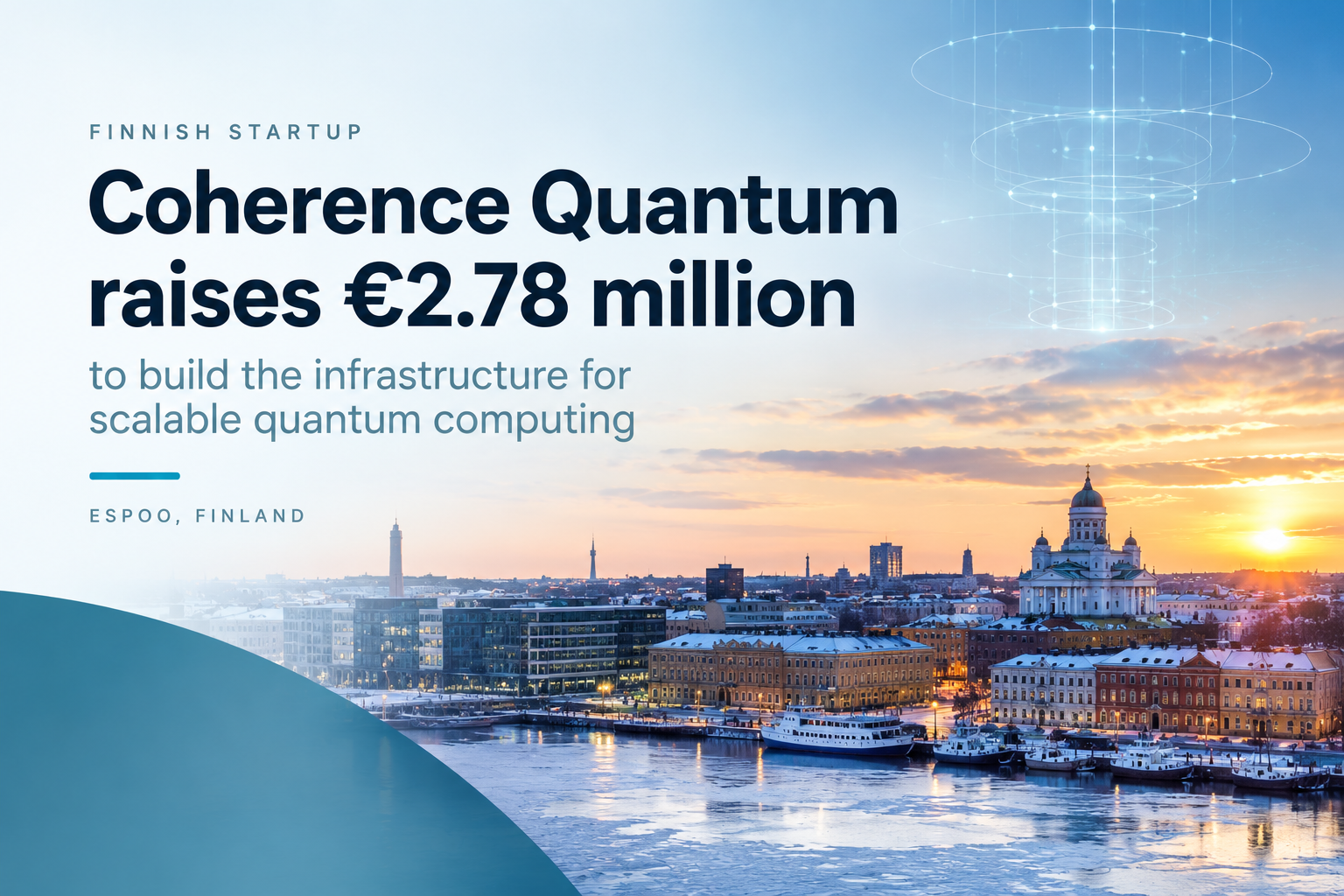
On 20 October 2026, Coherence Quantum announced a €2.78 million seed funding round led by Helsinki-based Lifeline Ventures, with participation from technology entrepreneur Mårten Mickos. The capital will support research and development, the establishment of a laboratory in Espoo, the development of initial prototypes and manufacturing processes, and team expansion.
This article explores:
- The technical challenge Coherence Quantum is addressing.
- Its October 2026 seed round and investors.
- How the funding can support product development.
- The lessons its funding journey offers deeptech entrepreneurs.
- How Fundingtrip can help founders prepare for financing.
Addressing a hidden challenge in quantum computing
Quantum processors rely on qubits, the basic units of quantum information. Many solid-state quantum computing systems must operate at temperatures close to absolute zero, requiring specialised refrigeration and carefully controlled environments.
Signals must travel between the outside world and the processor to control qubits and read their states. As processors grow in complexity, the associated wiring and signal-conditioning equipment can become increasingly difficult to accommodate. Additional connections consume space and contribute to the engineering challenges of maintaining the processor’s operating conditions.
Coherence Quantum is developing an integrated platform for cryogenic signalling and control. Its initial focus is cryogenic signal conditioning, with plans to develop denser signal interfaces and move more control functions inside the cryostat, closer to the quantum processing unit.
The significance of this work lies in the distinction between improving a processor and improving the infrastructure that allows it to scale. A quantum computer’s performance depends on the wider system in which the processor operates. Reducing the complexity of signal management and designing more integrated control hardware could help address practical constraints as systems become more sophisticated.
For quantum hardware developers, progress in these supporting technologies is therefore an important part of the journey towards larger and more capable machines.
October 2026: A €2.78 million seed round
On 20 October 2026, Coherence Quantum secured €2.78 million in seed funding. Lifeline Ventures led the round, joined by technology entrepreneur Mårten Mickos.
The investment is intended to move the company’s technology forward through several practical development steps.
First, the company plans to establish a laboratory in Espoo. A dedicated facility can support the experimental work needed to test hardware, evaluate technical designs and refine prototypes.
Second, the funding will support the creation of initial product prototypes and a manufacturing process. For a hardware startup, this is a significant stage: a research concept must be translated into something that can be produced, tested and eventually integrated into customers’ systems.
The investment will also finance continued research and development and help Coherence Quantum grow its team. These activities are interconnected. Progress in cryogenic hardware requires specialised expertise, iterative testing and the ability to translate research results into engineering solutions.
The round is an early-stage equity investment, rather than a publicly reported grant. Its purpose is to support the company’s technical development and prepare its platform for the next stages of commercialisation. The published funding announcement does not establish a company valuation, so the amount raised should not be confused with a valuation of the business.
From university research to a commercial hardware platform
Coherence Quantum’s origins in Aalto University’s research environment place it within the broader process of translating scientific advances into commercial technology. University research can provide a strong technical foundation, but building a company requires additional capabilities: product engineering, manufacturing, team development and a route to market.
The seed funding is designed to help bridge that gap. By establishing a laboratory and developing prototypes, the company can work towards demonstrating that its approach can address practical engineering challenges. Developing a manufacturing process alongside the prototypes is also important because a useful component must ultimately be reproducible and suitable for integration into larger systems.
The wider opportunity depends on progress across the quantum computing industry. As hardware developers pursue larger processors, they must address the infrastructure needed to control and operate them. Coherence Quantum’s focus on cryogenic signalling and control targets one part of that broader engineering challenge.
Commercial adoption will require technical performance to translate into benefits for quantum hardware developers. Compatibility with existing systems, reliability, manufacturability and the ability to meet demanding operating requirements will all matter as the company advances.
What Coherence Quantum’s funding journey shows
- Deeptech funding must support concrete technical milestones.
Establishing a laboratory, building prototypes and developing manufacturing processes give the investment a clear engineering purpose.
- Infrastructure can be as important as the headline technology.
Companies developing enabling components may address constraints that become more important as an entire industry advances.
- University research can provide a starting point, not the whole business.
Turning research into a commercial product also requires engineering, manufacturing and market development.
- Investors need to understand long-term technical challenges.
Hardware development may involve testing cycles and product milestones that differ from those of a conventional software startup.
- Plan for manufacturability early.
A prototype is an important achievement, but repeatable production and integration into customer systems are essential steps towards commercialisation.
For entrepreneurs building advanced hardware, scientific instruments or other capital-intensive technologies, the key lesson is to align fundraising with the specific stages required to reduce technical and commercial risk. A clear plan should explain what the investment will enable, how progress will be assessed and what milestones could justify the next phase of development.
How Fundingtrip can help entrepreneurs
Deeptech founders often need to understand a combination of private investment, public funding programmes and milestone-based financing. Fundingtrip helps entrepreneurs explore these options and prepare for the fundraising process. Its funding courses can help founders strengthen their knowledge of financing strategies and identify how to approach the next stage of their company’s development.
About the author of this post

.
Sara Gavidia
Content Creator
Communications Manager & Content creator
LinkedIn
[email protected]
.
Hello! I’m Sara 👋🏻
I’m FundingTrip’s Content creator. I write posts about technology, funding and innovation. If you liked this one, subscribe to our newsletter to receive more updates!
Post reviewed by David Arias, funding expert.