Food waste is both an environmental challenge and an operational problem for the food-service industry. Large kitchens, catering companies and institutional food providers prepare thousands of meals every day, yet identifying precisely what is being discarded—and why—can be difficult without reliable data.
Italian deeptech startup Ganiga is developing technology to make food waste measurable and actionable. Based in Pisa, the company combines artificial intelligence (AI), computer vision and robotics to help professional kitchens understand discarded food and improve their operations.
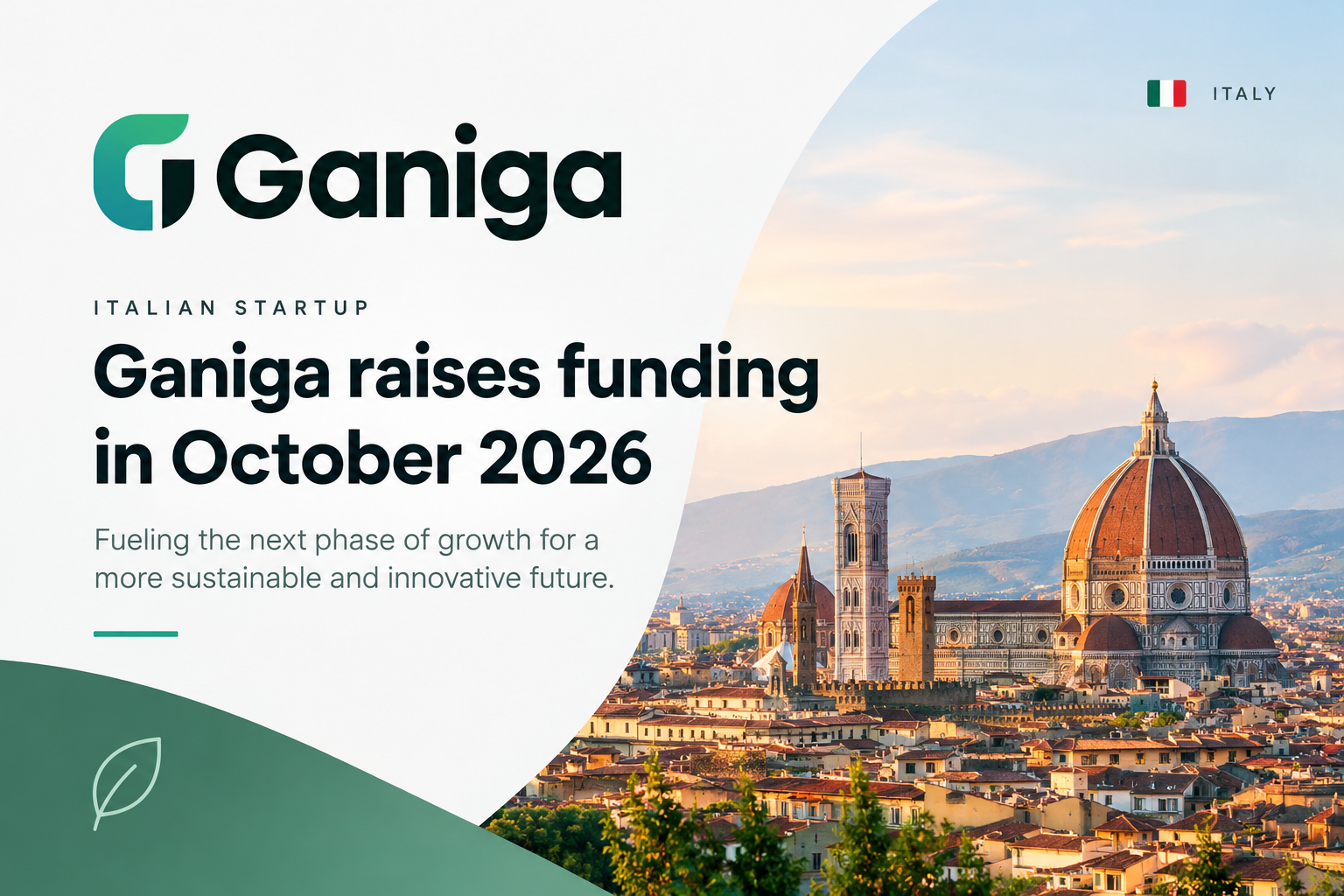
In October 2026, Ganiga announced a €1.5 million equity funding round led by Vivenda, alongside NextSTEP and three business angels. The company has also received €1 million through Smart&Start Italia, the public incentive managed by Invitalia, bringing the reported resources from these two sources to €2.5 million.
This article examines:
- Ganiga’s technology and the problem it addresses.
- Its October 2026 investment and public funding.
- How the new capital can support product development and commercial growth.
- What its funding journey can teach other entrepreneurs.
- How founders can prepare to identify and pursue suitable funding opportunities.
The company and its approach to food waste
Ganiga is developing HooolyFood, an AI-powered solution designed to identify discarded food without requiring it to be weighed. By combining computer vision with robotics, the company aims to turn food waste into operational information that kitchens can use to make better decisions.
Traditional approaches to measuring food waste can involve manual recording, weighing and analysis. These processes require time and consistent staff participation, which can make systematic measurement difficult in busy food-service environments. Automating the identification of discarded food offers an alternative: gathering information as part of everyday kitchen operations.
The value of this approach extends beyond simply recording waste. Data can help food-service operators investigate recurring patterns, improve preparation and portioning decisions, and identify opportunities to use ingredients more efficiently. Better measurement can also help organisations evaluate whether changes to their processes are producing meaningful results.
Ganiga’s technology is particularly relevant to collective catering, where large numbers of meals are prepared regularly and relatively small operational improvements can have a significant cumulative effect. The company has reported deployments in operations serving more than 30,000 meals per day.
October 2026: Equity investment and public support
Ganiga’s October 2026 financing combines private investment with public support, providing two distinct sources of capital for its development.
The €1.5 million equity round
On 20 October 2026, Ganiga announced an equity investment of €1.5 million led by Vivenda, an Italian collective catering operator that serves more than 50 million meals annually. NextSTEP, a London-based investor, and three business angels also participated in the round.
Vivenda’s participation is particularly relevant to Ganiga’s commercial direction. The investor operates in the same broad sector in which the startup intends to establish and expand its technology. That connection creates a potential route for closer engagement with the needs of professional kitchens and the operational realities of large-scale catering.
The company plans to use the investment to strengthen its technical and commercial teams, industrialise HooolyFood and develop its proprietary data platform. It also aims to accelerate recurring revenue growth.
These priorities reflect the transition that many technology startups must make: moving from developing a promising product towards delivering it consistently, supporting customers and building a repeatable commercial model.
The €1 million Smart&Start Italia contribution
In addition to the equity round, Ganiga received €1 million through Smart&Start Italia, an incentive managed by Invitalia. This brings the reported combined resources from the equity investment and public incentive to €2.5 million.
The distinction between these sources matters. Equity investment brings capital from investors in exchange for an ownership stake, while public support is awarded through a separate programme with its own eligibility rules and conditions. They should not automatically be treated as equivalent forms of financing.
For a deeptech company, combining funding sources can help support different aspects of development. Private capital can support growth and commercial execution, while an appropriate public programme can provide additional resources for an innovative business. The precise use and conditions of each source depend on the relevant investment agreement and programme rules.
From technical development to commercial expansion
Ganiga’s next challenge is to translate its technology into a scalable business. Industrialising HooolyFood means preparing the solution for broader and more consistent use, while strengthening the proprietary data platform can support the development of the company’s wider technological offering.
The initial focus is collective catering. The company intends to develop its presence in this market alongside Vivenda before extending its technology to other environments, including catering services and hotels.
This sequence offers a practical route to growth. Concentrating on a clearly defined customer segment can help a startup refine its product, understand purchasing requirements and demonstrate value in real operating conditions. Once the solution is better established, entering adjacent markets may become more manageable.
Ganiga will also need to connect technical performance with measurable customer benefits. For potential buyers, the key questions are whether the technology fits existing workflows, produces useful data, saves staff time and supports better resource management. Demonstrating these benefits will be important for generating recurring revenue and building a sustainable customer base.
What Ganiga’s funding journey shows
- Combine different financing sources strategically.
Ganiga’s equity investment and Smart&Start Italia support illustrate how private capital and public incentives can contribute to a startup’s development through different mechanisms.
- Connect investment to specific milestones.
Strengthening the team, industrialising a product and expanding a data platform are concrete priorities that can help translate funding into operational progress.
- Build commercial relevance into the technology.
Vivenda’s participation connects the investment to the sector in which Ganiga intends to grow. Understanding the end user’s needs is especially important for technology designed for industrial or professional environments.
- Start with a defined market.
Focusing on collective catering gives Ganiga an identifiable initial customer segment before expanding into adjacent markets.
- Treat recurring revenue as part of the growth plan.
For a business offering technology to professional customers, sustained growth depends not only on product development but also on converting deployments into durable commercial relationships.
For entrepreneurs developing AI, robotics or other deeptech solutions, the broader lesson is that funding should support a clear transition from technical capability to repeatable market adoption. A strong funding strategy connects the capital being raised with the milestones required to prove that customers will use and pay for the solution.
How Fundingtrip can help entrepreneurs
Ganiga’s experience highlights the importance of understanding both private investment and public funding opportunities. Fundingtrip helps entrepreneurs explore funding options and prepare for their next growth stage. Through the Fundingtrip courses, founders can strengthen their knowledge of funding strategies, improve their preparation and learn how to approach financing opportunities more effectively.
About the author of this post

.
Sara Gavidia
Content Creator
Communications Manager & Content creator
LinkedIn
[email protected]
.
Hello! I’m Sara 👋🏻
I’m FundingTrip’s Content creator. I write posts about technology, funding and innovation. If you liked this one, subscribe to our newsletter to receive more updates!
Post reviewed by David Arias, funding expert.