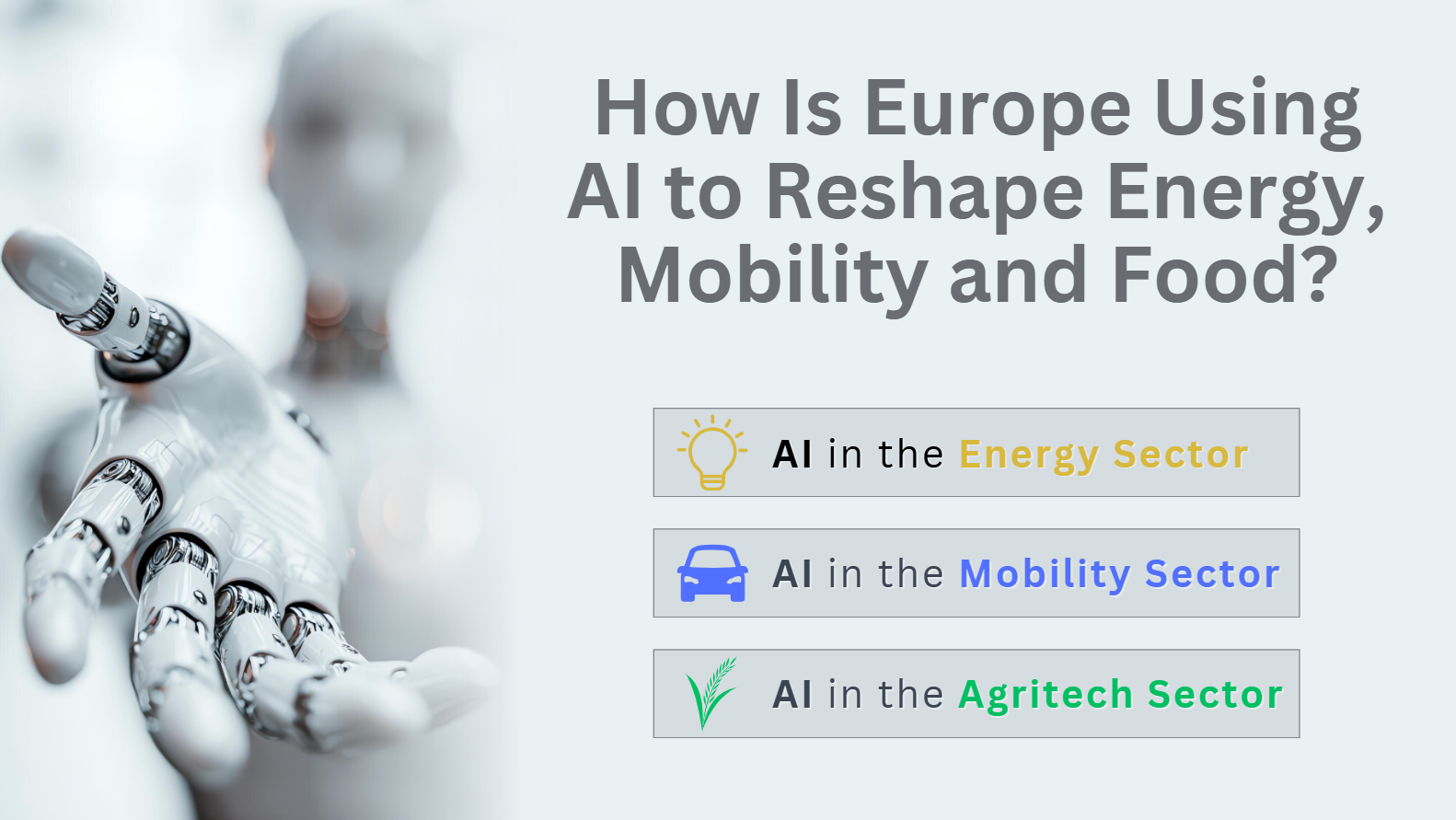
When talking about AI I think most people think of ChatGPT and these generative AI tools. But today I want to focus on something bigger and far more impactful than asking Gemini to create a funny picture or writing a cold email: today, we are focusing on the fusion of AI with renewables, mobility and agritech.
What is that?
Picture a world where the same mathematical engine that writes your emails also keeps a star burning inside a reactor, guides a driverless truck, and watches over five hundred million acres of farmland from orbit. That world is not science fiction: it arrived in 2025, and in 2026 it is scaling fast.
Artificial intelligence is undergoing what analysts are calling a Great Convergence: a simultaneous, mutually-reinforcing fusion with critical sectors such as energy, mobility, and food. Each domain had its own trajectory. Now those trajectories are merging, and the compounding effect is unlike anything industry has seen before.

How is AI being used in the Energy sector?
AI has multiple applications and uses related to cleantech, however, one of the most promising ones is centered on clean energy.
“AI is emerging as a powerful enabler of the energy transition: helping optimise energy systems, manage increasingly complex grids, improve forecasting, and accelerate improved efficiency and deployment of renewables”.
Tony Blair Institute for Global Change, June 2025.
In terms of energy power, there is a problem that has haunted fusion energy since the 1950s: plasma is inherently unstable. It writhes and collapses in ways that human operators cannot anticipate fast enough to correct. For seven decades, this instability has kept fusion perpetually “thirty years away.”
AI just broke that curse. Working with the Swiss Plasma Center at EPFL, Google DeepMind demonstrated that deep reinforcement learning can control a tokamak’s magnets in real time, stabilising complex plasma shapes that no human-designed controller could manage. The team also built TORAX, a fast differentiable plasma simulator, and is now deploying both tools inside Commonwealth Fusion Systems’ SPARC reactor.
However, it is very important to mention that all benefits have a cost, and thus we need to define a strategy. AI’s unstoppable expansion is both a challenge and an opportunity: on the one hand, AI’s maintenance and functioning requires massive amounts of energy, and that can delay and put in risk clean-energy deployment and deepen energy inequalities. But on the other hand, if used correctly, AI can catalyse clean energy innovation and accelerate decarbonisation, optimise grid efficiency and drive investment in renewables and advanced energy-transition technologies.
The choice is ours, so let’s choose wisely.
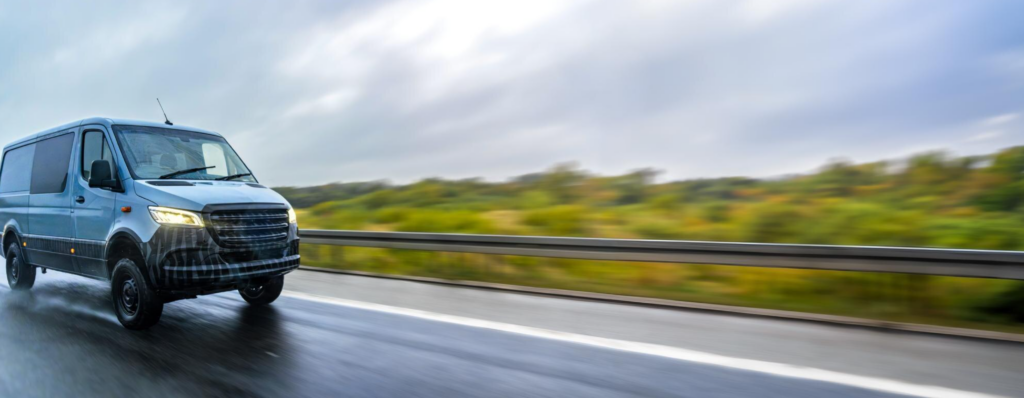
How is AI being used in the Mobility sector?
Europe is fast becoming the defining arena for the global autonomous vehicle race, and a British start-up, rather than a US tech giant, is leading the charge. In February 2026, Wayve, founded in Cambridge in 2017, closed a $1.2 billion Series D investment round, bringing its valuation to $8.6 billion, with backing from Microsoft, Nvidia, Uber, Mercedes-Benz, Nissan, and Stellantis.
What makes Wayve technically distinctive is its “end-to-end” embodied AI approach: rather than relying on pre-mapped routes and hand-coded rules, its AI Driver learns directly from data and has already driven zero-shot (without city-specific fine-tuning) in more than 500 cities across Europe, North America and Japan in a single year. In June 2025, Wayve and Uber announced plans to launch public-road Level 4 autonomous vehicle trials in London, enabled by the UK Secretary of State for Transport’s accelerated framework for self-driving commercial pilots, a move the government projects will create 38,000 jobs and add £42 billion to the UK economy.
In parallel, Germany’s Federal Ministry of Transport funded the NoWeL4 project in Berlin with €9.5 million, deploying Volkswagen subsidiary MOIA’s first Level 4 autonomous shuttles across a 15-square-kilometre test area of the city. Sweden’s Einride, meanwhile, continues to operate some of the only autonomously driven, fully electric freight fleets actively deployed in Europe, cementing the continent’s position not just as a regulatory environment for autonomy, but as an operational one.
This shows that Europe is betting heavily on smart autonomous mobility, but is it a safe bet? It is indeed a good strategic and environmental promise, yet it still faces significant regulatory, technical, and social hurdles that prevent it from being a straightforward “sure thing” at this stage. We will have to wait and see what the future holds!
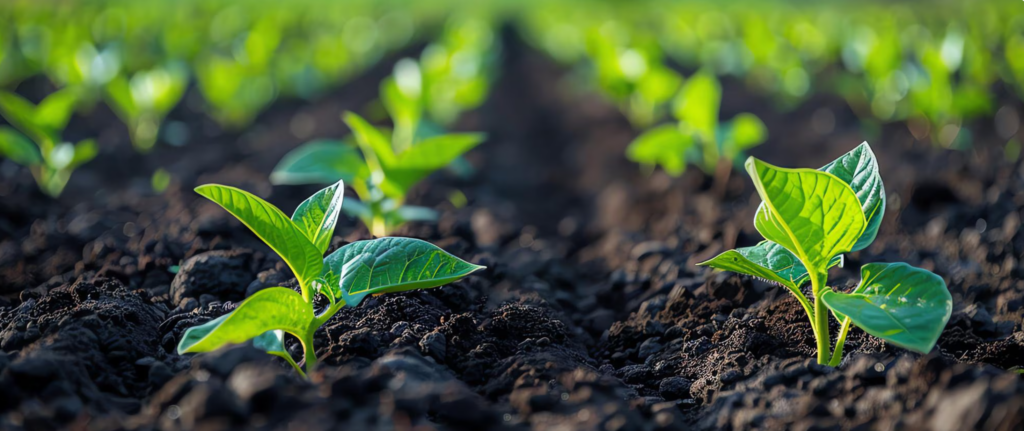
How is AI being used in the Agritech sector?
European agriculture is sitting at an inflection point. The EU’s AgriFood Industrial Ecosystem generates around €603 billion in value added and employs some 16 million people, yet its productivity and sustainability challenges are acute, with agricultural emissions having barely moved since 2005, food inflation still the eurozone’s top cost-of-living driver, and climate volatility threatening core supply chains. AI is increasingly the response.
The Netherlands has emerged as a particular hub: companies like Source.ag are deploying AI assistants directly inside horticultural operations, while Swiss precision-spraying company Ecorobotix is building autonomous systems capable of reducing herbicide usage by up to 95%. The EU-backed agrifoodTEF programme is accelerating this transition by connecting innovators (from Belgian AI robotics firm Exobotic Technologies to Italian precision-farming platform Agricolus) with real farm environments for live testing and commercialisation.
The European market for agricultural robots is also experiencing significant growth: its valuation was estimated at €6.37 billion in 2025 and is expected to reach €12.77 billion by 2030. This expansion shows the growing importance of automation to address increasing agricultural production needs and labour shortages. Germany leads the European agricultural robotics market, with the Netherlands and France following closely. Horizon Europe has also funded and supported the development of robotics through a range of projects.
Nature Robots, backed by a €6.5 million European Innovation Council grant, is developing fully autonomous, deep-learning-powered farming platforms designed specifically for regenerative agriculture: a direct response to the EU’s Farm to Fork strategy. The convergence of EU policy ambition and real engineering capability is creating something genuinely new: a food system that is not just more efficient, but measurably more resilient.
And after this reading…what can we conclude?
Every decade has its technology narrative: the 1990s had the internet, the 2010s had the smartphone, etc. What distinguishes the AI-industrial convergence of the 2020s is that it is not a platform layered on top of existing industries: it is restructuring the physics of how those industries operate.
Fusion reactors do not become commercially viable because financiers decide they should; they become viable because AI shortens the design cycle from decades to years. Autonomous vehicles do not scale because regulators relax; they scale because AI reduces the cost and time of deployment so fast that the economic case becomes irresistible. Farms do not adopt precision agriculture because it is fashionable; they adopt it because labour scarcity and climate volatility leave no alternative.
There is also a feedback loop that makes this moment uniquely self-reinforcing: AI demands enormous quantities of clean, reliable electricity; and that demand is funding the race to commercialise fusion and accelerate renewables. Those energy sources, once deployed, power more AI computation. More computation improves the models. Better models accelerate every sector they touch, including energy itself.
The question is not whether these technologies will converge- it already happened. The question is how fast your organisation will move from watching to participating, and how much of the transition you will help shape versus simply inherit.
About the author of this post

.
Sara Gavidia
Content Creator
E-learning Specialist
LinkedIn
[email protected]
.
Hello! I’m Sara 👋🏻
I’m FundingTrip’s Content creator. I write posts about technology, funding and innovation. If you liked this one, subscribe to our newsletter to receive more updates like this one!