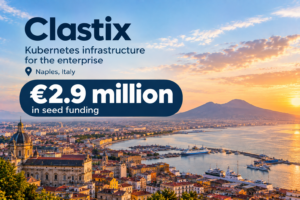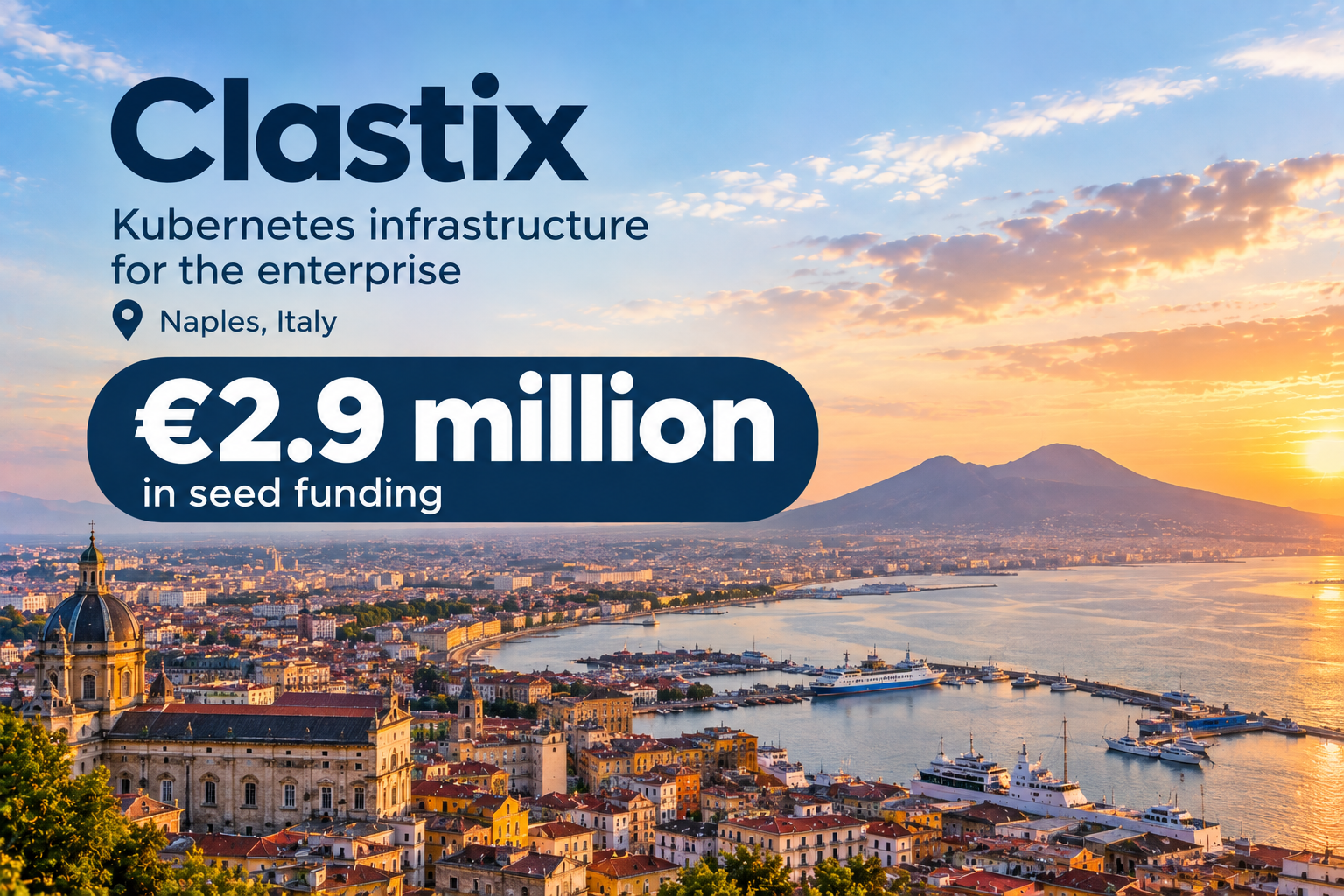
Clastix is an Italian infrastructure software company based in Naples, developing technology that helps organisations manage Kubernetes environments across multiple teams, workloads and clusters.
Its technology portfolio includes Kamaji, an open-source Hosted Control Plane engine, and kMetal, its commercial platform for fleet management, governance and production operations. The company focuses on reducing the operational complexity associated with running Kubernetes at scale, including the infrastructure required to manage multiple control planes.
In September 2026, Clastix reached an important financing milestone with its first external investment.
What this article covers
- Clastix’s Kubernetes infrastructure technology
- The company’s open-source and commercial product strategy
- Its first external financing in September 2026
- The role of CDP Venture Capital, Mistral and Vertis SGR
- What its funding journey shows for infrastructure and open-source entrepreneurs
From open source to commercial infrastructure
Clastix was founded around the challenges faced by organisations running Kubernetes at scale. As the number of clusters, teams and workloads increases, managing the underlying infrastructure can become increasingly complex.
Kamaji provides an open-source Hosted Control Plane engine under the Apache 2.0 licence. The company’s commercial platform, kMetal, builds on this infrastructure with capabilities for fleet management, governance and production operations.
The company has developed its technology for demanding infrastructure environments and says it is already used in production by teams in Europe and North America, including organisations operating in AI, telecommunications, cloud services and the public sector.
This background is important to the company’s September financing: Clastix entered its first external round with an established technology portfolio and production use cases rather than raising capital solely to build an initial prototype.
September 2026: first external funding
On 24 September 2026, Clastix announced a €2.9 million seed investment, marking the first external funding in the company’s history.
The round was led by CDP Venture Capital SGR, with participation from Mistral and Vertis SGR through the Vertis Venture 6 Digital Sud fund.
The Vertis fund is partially financed through the European Union’s NextGenerationEU programme, giving the round an indirect public-financing dimension alongside the private and corporate investment.
Clastix plans to use the capital for product development, customer success, solutions engineering and go-to-market expansion. The company also expects to grow its team over the following three years as it targets larger enterprise customers.
Investment will continue in Kamaji as an open-source project while kMetal develops as the company’s commercial platform.
Private and public-backed capital
Clastix’s September 2026 round combines several elements of the European technology ecosystem.
CDP Venture Capital is the lead investor, while Mistral is both an investor and a user of Clastix technology. Vertis SGR participated through a fund partially financed by NextGenerationEU.
This means that the company’s first external financing combines institutional venture capital, strategic corporate investment and a fund with European public backing.
The structure is particularly relevant to Clastix because its technology sits underneath the infrastructure used by other technology companies. Mistral’s participation connects the investment directly to Europe’s rapidly developing AI infrastructure ecosystem.
What Clastix’s funding journey shows
Clastix provides an example of a different route to venture funding: building substantial technical infrastructure and commercial traction before raising its first external round.
Unlike startups that raise multiple rounds during their first years, Clastix reached September 2026 with one disclosed external financing round. Its open-source strategy has helped establish its technology within the Kubernetes ecosystem, while kMetal provides a commercial route for organisations requiring fleet management and production capabilities.
For open-source entrepreneurs, the journey demonstrates that an open-source product does not necessarily have to be the end commercial product. It can also form the technological foundation and adoption channel for a paid enterprise layer.
The involvement of Mistral also shows how a demanding customer can become part of a startup’s financing ecosystem. A strategic investor can bring not only capital but also product validation, technical feedback and a reference use case.
What this means for entrepreneurs
Clastix’s path can be particularly relevant for founders building developer tools, infrastructure software or open-source technologies.
Instead of raising capital at the earliest possible stage, founders may choose to establish the technology, community, customers and commercial model first. When external funding is eventually raised, the capital can then be directed towards clearly defined growth objectives such as enterprise sales, engineering and international expansion.
The September 2026 round also illustrates the range of financing sources available to European technology companies. Institutional venture capital, strategic corporate investors and publicly backed investment funds can participate in the same financing structure.
For entrepreneurs developing infrastructure or open-source technology, the journey reinforces the importance of building a clear connection between technical adoption and a sustainable commercial model.
Founders looking to understand how to map funding opportunities, prepare for investment and build a structured financing strategy can explore Fundingtrip’s funding courses.
About the author of this post

.
Sara Gavidia
Content Creator
Communications Manager & Content creator
LinkedIn
[email protected]
.
Hello! I’m Sara 👋🏻
I’m FundingTrip’s Content creator. I write posts about technology, funding and innovation. If you liked this one, subscribe to our newsletter to receive more updates!
Post reviewed by David Arias, funding expert.